Thursday, June 25, 2009

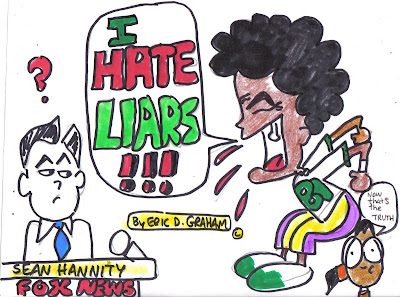
BOBBEE BEE "THE LIE DETECTOR

by Eric D.Graham

America was build on a lie because Christopher Columbus didn't discover America. The Native Americans didn't celebrate Thanksgiving. Jesus is not white and George Washington had slaves. As a result, Duane Alan Hahn said that a Liar's motto is "If at first you don't deceive, lie, lie, and lie again." So Let the Truth be Told: Crooks lie, Criminals lie, Children lie, Parents lie, Husbands and Wives lie, News Reporters lie, Teachers lie, Lawyers lie, Politicians lie, Police Officers lie, Preachers lie, the Government lies and even you and I lie. But can you spot a liar, if you saw one. Because the Lie is written all over your face according to Marc Salem, a leading authority on nonverbal communication and interpersonal skills,who reveals how to spot a liar in his book The Six Keys To Unlock and Empower Your Mind. Here are a few hidden clues.
1. Sharp Pauses
When a person is lying, the pauses are longer in the middle of the sentences, provide short answers to questions and take longer to begin their response than someone who's merely nervous. After all, they need time to create the lie.

2. The Eyes are the Windows to the Soul
See where the eyes go after you ask the question. People tend to look up to the right to visualize or invent, a response and down to the right to invent sounds. We often recall the truth by looking up to the left or down to the left


3.Excessive gesturing
When people lie, they move their hands alot, nervous movements like scratching the body or fiddling with a pencil. If a candidate is asked a question & immediately pick up a pen and begins playing with it, something's a miss subconsciously.

4.Lack of gesturing.

The rehearsed or practiced liar, who has planned his deceit ahead of time, will try to control gestures. Many politicians are coached to stay still during TV appearances. They keep their face inexpressive, upper body stiff and legs often crossed.


5. READ HIS LIPS


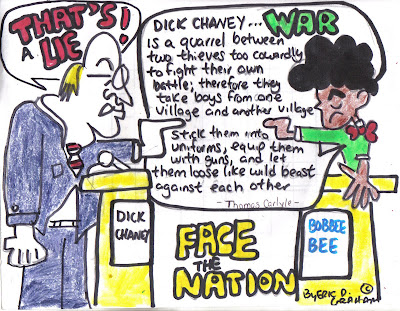
Look for unsusal movement of the mouth, lips, or tongue, While discussing weapons of mass destruction in recent interview, former Vice president Dick Chaney bit his lips, sucked them inward more than half a dozen times. Tight lips indicate you may be planning to keep the truth in. If you actually suck the lips in, you maybe withholding anger. A dry cough or cracking voice is psychological response to the discomfort of lying. When you are nervous your mouth becomes dry and you lick your lips and swallow as you struggle to find the right words to say.

6.HAND HIDING

Hands symbolically express the emotions of the heart which is why liars tend to keep them hidden. Research on handshakes shows that the single most important factor is palm-to-palm contact. When people don't get this contact, they wonder what the other person is hiding. They'll stick their hands in their pockets, clench them, or hold them behind their back.

7.HALF SMILES.

A smile is the most common facial expression to make emotions. If is often used to hide displeasure and anger. A real smile changes the entire face. The eyes light up. The forehead wrinkles, the eyebrows and cheeck muscles rise.....

8.EXCESSIVE CONFIDENCE

Think of this as the super smooth salesman effect. Look for nonverbal communication, which include voice, tune, volume, and speaking rate that sound overconfident. You can spot a liar by going with your gut impression. Listen for anything that doesn't sound normal. If you feel something is out of norm, even if you can't articulate it specifically, you are probably right. Both President Bush and Condi Rice display this behavior.


9. CREATION OF BARRIERS

Just as we pull down the shades when we don't want others to see into our home, we close off entrances to our body so our feelings aren't seen. There are windows at the bottom of our feet, kneecaps, bottom of the torso, middle of the chest, neck, mouth, eyes, and top the head. A liar tends to close off these entrances- putting clothing over them, turning them away from the person's he is talking to, putting objects or furniture between himself and others, or simply folding his arms. When someone's windows are closed, we don't feel as comfortable with the interaction.


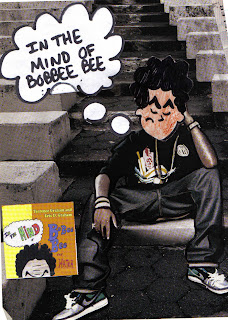
Please read "In the Mind of Bobbee Bee" the cartoon every week on the http://www.blackathlete.com/


Thursday, May 07, 2009

BOBBEE BEE: TEN COMMANDMENTS OF PARTISAN WARFARE

THE TEN COMMANDMENTS OF PARTISAN WARFARE 1.KEEP IT SIMPLE

A long-winded, complex, nuanced argument is a guaranteed ticket to disaster. To be effective, you need to be able to fit your basic message on a bumper sticker.

2. PERSONALIZE THE ISSUE.
Don’t talk about issues in an abstract way. Persuade by talking in terms of how issues impact people, relate your own experience, and highlight your opponents’ self interest (e.g show them how Democratic policies mean better-paying jobs, cleaner air or cheaper anti-psychotic drugs.

3.FRAME THE ARGUMENT TO YOUR ADVANTAGE

Make your case by presenting each issue according to your beliefs and values, not theirs. Never, for example, let a sanctimonious conservative lecture you about what real American values are.

4.FIND COMMON GROUND
5.EXPOSE HYPOCRISY
Nothing undermines an argument faster than exposing hypocritical behavior, contradictory statements, and wholesale fakery-either on the part of your opponents or the part of the politicians they’re defending.


6. EXUDE CONFIDENCE
Always project the courage of your convictions.

7. DON’T SERMONIZE

No one likes to be lectured to, and no one likes a self-righteous windbag. Ranting from atop your soapbox will only harden your opponent’s position and make him or her more hostile. If you’ve made an enemy, you haven’t won an argument.

8.MAKE YOUR OPPONENT LAUGH

Humor can be potent weapon in political debate. Making humorous observations and demonstrating an ability to laugh at yourself-will help disarm your opponents and keep them engaged.


9. BE OPENED MINED

It’s the civilty, stupid. Be prepared to listen respectfully and concede a point or two before moving in for the kill. You can learn a lot from people with whom you disagree-even those you believe to be outrageously misguided –and fine tune your arguments in the process.
10.PICK BATTLES YOU CAN WIN

Don’t expend too much energy trying to win over a staunch conservative. You’d have better luck trying to coax a rock to grow. Target the fence-sitters and the more easily converted.
List created by Daniel Kurtzman from his hiliarious book "How to Win A Fight With a Conservative


Thursday, April 09, 2009

BOBBEE BEE: DO's and DON"T WHILE ONLINE


Many kids and teens every year are abducted due to exposure on the Internet. Almost every teenager goes online thinking that this will never happen to them because they won’t meet anybody in a chat room. Internet predators have a way of appearing to be somebody that they are not. You may think you have proof that you are talking to somebody that is your age and is your friend when you may really be talking to somebody else. Kids don’t know what could really happen by just putting their name out there. Parents are giving kids false expectations to keep them from being scared. They don’t think that Internet predators will fly across the world just to come to their house. You can’t hide behind a screen name. Even if they can’t see you, they can still find you. You may be revealing everything you think you’re not, just by saying “Hi”. Your screen name may be revealing. Your profile may be too. The Internet predators have ways of tricking kids into revealing personal information without it being obvious. Even though you think you aren’t telling them anything, you may be. Even the simplest things like your basketball team can be tracked down

DON'T give out personal information online such as your address, telephone numbe, your name, parent's name, school name, school schedule, passwords etc.

DON'T give out information about you or your family to individuals you meet online.
DON'T send or post pictures online without getting parental permission first.

DON'T believe everything that you read online or that makes you feel scared, uncomfortable, or confused.
DON'T keep new online buddies secret from your parents.


DON'T communicate with anyone that you don't know in person and that your parents haven't approved.

DON'T agree to meet with someone you've met online before getting parental permission.
DO use the Internet to help with schoolwork.

DO be polite to others when using the Internet.

DO ask permission from your parents before you "download" (copy) programs from the Internet. They may contain viruses or spyware.

DO get your parents's permission before you talk online to anyone you don't personally know.
DO discuss it with your parents if you're contacted online by someone you don't know.
DO NOTIFY your parents if you receive or come across anything online that makes you feel scared, uncomfortable, or confused.
Information provided by the North Carolina State Bureau of Investigation

.

Monday, March 09, 2009

BOBBEE BEE: I AM NOT CRAZY! I AM JUST LITTLE UNWELL

Every cartoon character needs a theme song and Bobbee Bee has finally found his. The song is by Matchbox 20 and it is entitled Unwell. Music, itself, is an universal language everybody can relate to and we all can relate to this song. So, sing along and learn something about yourself because Music is Therapeutic. But honestly, when we think of someone being crazy or "just a little unwell" images of the Joker from Batman comes to mind. Or maybe Terrell Owens yelling at Tony Romo or Tom Cruise jumping onOprah's couch. How about Britney Spears cutting off all of her hair or maybe Tupac Shakar spitting into the camera yelling "WESTside!! Regardless of what or whom you think is a little crazy, Aren't we all just a little unwell.


Read "In the Mind of Bobbee Bee" the book and READ "In the Mind of Bobbee" the cartoon every week on http://www.blackathlete.com/ to get the real story.


I'm not crazy, I'm just a little unwell I know, right now you can't tell But stay awhile and maybe then you'll see A different side of me I'm not crazy I'm just a little impaired I know, right now you don't care But soon enough you're gonna think of me And how I used to be Hey, how I used to be How I used to be, yeah Well I'm just a little unwell How I used to be How I used to be

Wednesday, February 25, 2009

BOBBEE BEE: TURN OFF THAT TV!! MEDIA MANIPULATION MIND CONTROL (This video is PG-13 contains strong language)

1.two-thirds of infants and toddlers watch a screen an average of 2 hours a day

2.kids under age 6 watch an average of about 2 hours of screen media a day, primarily TV and videos or DVDs

3. kids and teens 8 to 18 years spend nearly 4 hours a day in front of a TV screen and almost 2 additional hours on the computer (outside of schoolwork) and playing video games

The American Academy of Pediatrics (AAP) recommends that kids under 2 years old not watch any TV and that those older than 2 watch no more than 1 to 2 hours a day of quality programming.
Most kids plug into the world of television long before they enter school.


According to the Kaiser Family Foundation (KFF):


The first 2 years of life are considered a critical time for brain development. TV and other electronic media can get in the way of exploring, playing, and interacting with parents and others, which encourages learning and healthy physical and social development.

As kids get older, too much screen time can interfere with activities such as being p
hysically active, reading, doing homework, playing with friends, and spending time with family.

Of course, television, in moderation, can be a good thing: Preschoolers can get help learning the alphabet on public television, grade schoolers can learn about wildlife on nature shows, and parents can keep up with current events on the evening news. No doubt about it — TV can be an excellent educator and entertainer.

But despite its advantages, too much television can be detrimental:
Children who consistently spend more than 4 hours per day watching TV are more likely to be overweight.
Kids who view violent acts are more likely to show aggressive behavior but also fear that the world is scary and that something bad will happen to them.
TV characters often depict risky behaviors, such as smoking and

drinking, and also reinforce gender-role and racial stereotypes.

Children's advocates are divided when it comes to solutions. Although many urge for more hours per week of educational programming, others assert that no TV is the best solution. And some say it's better for parents to control the use of TV and to teach kids that it's for occasional entertainment, not for constant escapism.

That's why it's so important for you to monitor the content of TV programming and set viewing limits to ensure that your kids don't spend too much time watching TV.


Violence

To give you perspective on just how much violence kids see on TV, consider this: The average American child will witness 200,000 violent acts on television by age 18. Kids may become desensitized to violence and more aggressive. TV violence sometimes begs for imitation because violence is often promoted as a fun and effective way to get what you want.

Many violent acts are perpetrated by the "good guys," whom kids have been taught to emulate. Even though kids are taught by their parents that it's not right to hit, television says it's OK to bite, hit, or kick if you're the good guy. This can lead to confusion when kids try to understand the difference between right and wrong. And even the "bad guys" on TV aren't always held responsible or punished for their actions.


Young kids are particularly frightened by scary and violent images. Simply telling kids that those images aren't real won't console them, because they can't yet distinguish between fantasy and reality. Behavior problems, nightmares and difficulty sleeping may be a consequence of exposure to media violence.
Older kids can also be frightened by violent depictions, whether those images appear on fictional shows, the news, or reality-based shows. Reasoning with kids this age will help them, so it's important to provide reassuring and honest information to help ease fears. However, consider not letting your kids view programs that they may find frightening.

Risky Behaviors

TV is full of programs and commercials that depict risky behaviors such as sex and substance abuse as cool, fun, and exciting. And often, there's no discussion about the consequences of drinking alcohol, doing drugs, smoking cigarettes, and having premarital sex.

For example, studies have shown that teens who watch lots of sexual content on TV are more likely to initiate intercourse or participate in other sexual activities earlier than peers who don't watch sexually explicit shows.

Alcohol ads on TV have actually increased over the last few years and more underage kids are being exposed to them than ever. A recent study by the Center on Alcohol Marketing and Youth (CAMY) found that youth exposure to alcohol ads on TV increased by 30% from 2001 to 2006.

And although they've banned cigarette ads on television, kids and teens can still see plenty of people smoking on programs and movies airing on TV. This kind of "product placement" makes behaviors like smoking and drinking alcohol seem acceptable. In fact, kids who watch 5 or more hours of TV per day are far more likely to begin smoking cigarettes than those who watch less than the recommended 2 hours a day.

Obesity

Health experts have long linked excessive TV-watching to obesity — a significant health problem today. While watching TV, kids are inactive and tend to snack. They're also bombarded with ads that encourage them to eat unhealthy foods such as potato chips and empty-calorie soft drinks that often become preferred snack foods.

Studies have shown that decreasing the amount of TV kids watched led to less weight gain and lower body mass index (BMI — a measurement derived from someone's weight and height).


Commercials

According to the AAP, kids in the United States see 40,000 commercials each year. From the junk food and toy advertisements during Saturday morning cartoons to the appealing promos on the backs of cereal boxes, marketing messages inundate kids of all ages. And to them, everything looks ideal — like something they simply have to have. It all sounds so appealing — often, so much better than it really is.

Under the age of 8 years, most kids don't understand that commercials are for selling a product. Children 6 years and under are unable to distinguish program content from commercials, especially if their favorite character is promoting the product. Even older kids may need to be reminded of the purpose of advertising.

Of course, it's nearly impossible to eliminate all exposure to marketing messages. You can certainly turn off the TV or at least limit kids' watching time, but they'll still see and hear advertisements for the latest gizmos and must-haves at every turn.

But what you can do is teach kids to be savvy consumers by talking about the products advertised on TV. Ask thought-provoking questions like, "What do you like about that?," "Do you think it's really as good as it looks in that ad?," and "Do you think that's a healthy choice?"

Explain, when kids ask for products advertised, that commercials and other ads are designed to make people want things they don't necessarily need. And these ads are often meant to make us think that these products will make us happier somehow. Talking to kids about what things are like in reality can help put things into perspective.

To limit kids' exposure to TV commercials, the AAP recommends that you:

Have your kids watch public television stations (some programs are sponsored — or "brought to you" — by various companies, although the products they sell are rarely shown).

Teaching Good TV Habits
Here are some practical ways to make TV-viewing more productive in your home:

Limit the number of TV-watching hours:
Stock the room in which you have your TV with plenty of other non-screen entertainment (books, kids' magazines, toys, puzzles, board games, etc.) to encourage kids to do something other than watch the tube.


Keep TVs out of bedrooms.

Turn the TV off during meals.
Don't allow kids to watch TV while doing homework.
Treat TV as a privilege to be earned — not a right. Establish and enforce family TV viewing rules, such as TV is allowed only after chores and homework are completed.
Try a weekday ban. Schoolwork, sports activities, and job responsibilities make it tough to find extra family time during the week. Record weekday shows or save TV time for weekends and you'll have more family togetherness time to spend on meals, games, physical activity, and reading during the week.
Set a good example by limiting your own TV viewing.
Come up with a family TV schedule that you all agree upon each week. Then, post the schedule in a visible area (e.g., on the refrigerator) so that everyone knows which programs are OK to watch and when. And make sure to turn off the TV when the "scheduled" program is over instead of channel surfing.


Watch TV together. If you can't sit through the whole program, at least watch the first few minutes to assess the tone and appropriateness, then check in throughout the show.


Offer fun alternatives to television. If your kids want to watch TV but you want to turn off the tube, suggest that you all play a board game, start a game of hide and seek, play outside, read, work on crafts or hobbies, or listen and dance to music. The possibilities for fun without the tube are endless — so turn off the TV and enjoy the quality time together.
Reviewed by: Mary L. Gavin, MD
Date reviewed: October 2008


Thursday, February 19, 2009

BOBBEE BEE VS PUBLIC EDUCATION


By Albert Shanker, President
American Federation of Teachers
written in 1994


Time is running out on public education. Americans have always been committed to the public schools. They consider them a basic democratic instititution where students from the many diverse groups in the US can learn to work together. But according to Public Agenda's new study, " Assignment Incomplete," the support for public education is wearing thin. A majority of Americans believe that the public schools can not be counted on to provide things they consider most important in an education-discipline, the basics, and standards. Assuming the report is correct- and its is very convincing-the schools have a window of opportunity to regain public support. If that is ignored, we will see the collapse of the system.

Most Americans favor the idea of public education. And generally, when you ask them if they are satisified with the schools their children attend, they answer, yes. But, as Public Agenda researchers found, this kind of veneer. The minute the researchers started probing on issues that the public care about, the support for public school evaporated. A big maturity said that PRIVATE SCHOOLS do a BETTER JOB. For example, 61 percent said that PRIVATE schools are more likely to provide order and discipline in the classroom ; only 18 percent thought local public schools did a better job at first. Fifty-three percent said that private schools have higher academic standards; only 24 percent said standards were higher in local public schools. And when Public Agenda researchers asked the ultimate question-------"Where would you send you kid if money was not an issue?___57 PERCENT of parents said "to a private school"


This is devastating. Yet though Americans are angry and frustrated about public education, Public Agenda found that they do not want to scrap it. They are willing to give public education another chance. And what they want is straightforward enough: primarily, safe and orderly schools where all students can at least be sure of learning the basics.

Help us; help you! Bobbee Bee is here!! Support "In the Mind of Bobbee Bee"

Tuesday, February 17, 2009

BOBBEE BEE: WOULD YOU PASS THIS BILL?

This country is facing some of the worst economic times in years,and we must create CHANGE TOMORROW by taking ACTION TODAY!
Be Heard! Support President Obama's Economic Recovery Package

How Does this bill Matter to You?
AMERICAN RECOVERY AND REINVESTMENT ACT
A bill to create jobs, restore economic growth, and strengthen America's middle class through measures that modernize the nation's infrastructure, enhance America's energy independence, expand educational opportunities, preserve and improve affordable health care, provide tax relief, protect those in greatest need, and for other purposes.

Summary of the Key Points:

1.Clean, Efficient, American Energy
The recovery package will create more than 500,000 jobs, provide energy efficiency funds for the nation's schools, offer support for the nation's governors and mayors to tackle their energy challenges, and establish a new loan guarantee program to keep our transition to renewable energy on track during the economic crisis.
2.Transforming Our Economy with Science, Technology & Innovation
This economic recovery package invests in science and technology – both creating jobs in the short-term and building a foundation for strong economic growth in the long-term. The recovery package will provide funding for job and research opportunities for students, help renovate research facilities, and extend broadband and wireless services to underserved communities across the country.
3.Lowering Health Care Costs and Ensuring Broader Coverage
As millions of people lose their jobs in this recession, they are also losing their heath insurance. The package protects health coverage for millions of Americans by providing up to 12 months of subsidized COBRA health insurance continuation coverage and a temporary state option to cover jobless workers through Medicaid. The bill will also invest in information technology and save or create more than 250,000 jobs in health care and education.

4. Investing in Education for the 21st Century
The recovery package will invest in educating students for the 21st century. The bill includes funding to modernize classrooms, libraries, and labs in elementary and secondary schools, as well as colleges and universities; provides funding for schools to become more energy efficient and upgrade technology; and improves current education tax credits to help make college more affordable. The bill will also help to prevent teach layoffs and other education cutbacks by establishing a State Fiscal Stabilization Fund.
5. Creating Jobs by Modernizing Roads, Bridges, Transit and Waterways
The recovery package would create 1.5 million American jobs rebuilding our roads and bridges, modernizing public buildings and mass transit, and putting people to work cleaning up our air, water and land.
7. Tax Cuts for Middle-class Families and American Businesses
The tax cuts in the American Recovery and Reinvestment Act will give 95% of American workers an immediate tax cut and encourage job-creating investments by businesses large and small.


9.Helping Workers Hurt by the Recession
In this economic crisis, high unemployment and rising costs have put a huge strain on many American families. The American Recovery and Reinvestment Act contains a series of provisions to help families deal with job loss and rising costs. Provisions in this bill include extending unemployment benefits, increasing food stamp benefits, and enhancing job training.

Take Action Now. Support President Obama's Economic Recovery Package
Information provided by Young & Powerful Group

Sunday, January 04, 2009

BOBBEE BEE: A WORLD WITHOUT COLOR

by Eric D. Graham

Colors.
Colors.
 Colors.
All Brother.

Could you imagine a world without colors.
No RED.
NO Black.
No Green.
All the true revolutionaries in the room know exactually what I mean. Because, if there was a world without colors,
I could not count a jar full of jelly beans.

And The Incredible Hulk couldn't be MEAN.
Because The Incredible HULK
Couldn't turn GREEN.

And if there was a world without COLOR,
it probably would be really scary.
Because I could not text you,
this poem on my Black Berry.
See, what I mean.

In a world with NO COLOR
You couldn't rock your over sized White Tee's-
And girls couldn't wear their TIGHT Blue jeans.
See, in a world without color

You could not even cheer for your favorite sports teams
Cause there would be
No Washington Redskins or Boston Red Sox
Or Cleveland Browns or Cincinnati Reds
And NO Green Bay Packer fans with yellow cheese on the top of their heads.

Hey dude, you need to listen to every world I just said.
Because, it's something everybody needs to think about.
Because, if there was NO color,
Would it really matter if there was a BLACK MAN in the WHITE HOUSE ? And if there was a world with NO color would there still be RACISM in the DEEP SOUTH.

And would Flavor Flav take those GOLD Teeth out of his mouth.
See, if there was a world with NO color, there would be no need for flat screen color-TVs. Or Rap videos on BET.


Don't get MAD at me.
See, if there was a world with no color, I could throw away my grandmother's black and white TV from 1963.
Do you Remember the Times?
Michael Jackson made it plain with just one line ?

Because it really does not matter if you are WHITE or BLACK.
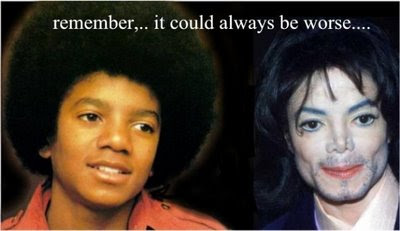
But I still don't understand why he MESSED up his NOSE like that.

Doesn't he know that the BLACKER THE BERRY the SWEETER the JUICE?
Man, Michael Jackson must have forgotten his ROOTS.
See, in a world with NO color, America would be through.

Because nobody would have to Pledge Allegiance to the RED, WHITE, and BLUE.
And maybe Sean Bell would still be alive just like ME and YOU.
Because he wouldn't have gotten SHOT 50 TIMES by the BOYS IN BLUE.

See, if there was NO color what would you DO?
How would you think?
Would a Girl BE A GIRL
 If She didn't wear PINK
Cause Roses are RED and VIOLETS are BLUE
But in a world with NO COLORS, how would you say I love you?

See, in a world with NO COLOR,
I think, I would still ask the Lord to protect us?
Because in a world with NO COLOR,
Would Rosa Parks still have to sit at the back of the bus?
Could I still get down like James Brown
And still Say It Loud!
 I am Black!
And I am Proud!

See, a world with NO color would probably get dull after awhile?
Because honestly,a world without color would actually cramp my style.
Because, I'm quite VERSATILE.
But in a world with NO COLOR,
I could not wear my GREEN GUCCI GATORS. Or eat me a box full of rainbow colored Skittles
Or my Now-or LATERS.

See, in a world with NO COLOR, I think, this is something you should know.
Because RED means STOP
And GREEN means GO.
But in a world with NO COLOR, there would be alot of traffic jams.
Because there would be no traffic lights.
See, a world without COLOR just doesn't seem RIGHT.
Because in a world without COLOR,
There would be NO need for CRAYONS anymore.
I mean a BOX of 64,
With the built-in pencil sharpener.
See, a world without color, would be much DARKER
And I'm NOT COLOR BLIND.
Besides, I need my MAGIC MARKERS.
So, I can paint a pretty picture, and COLOR in between the lines.
Because I'm Artist.
Can you Believe this?

In a world without COLOR, I could not play my BLUES records
Over and over until I remember every line.
And press rewind.
Until I can paint a beautiful picture
In the back of my MIND.
But in a world with NO COLOR, this doesn't make any sense.
Because in a world without color, I couldn't listen to PRINCE.

Sing about his "little" RED CORVETTE.
But I'm NOT finished yet.
Because in a world with NO COLOR, I could not even hear PRINCE Sing PURPLE RAIN.
Now, that's INSANE!!
But if there was a World with NO COLOR, would that mean there would be NO GANGS? NO BLOODS, NO CRIPS, NO LATIN KINGS.
Maybe a world without COLORS is a Beautiful thing?
by Eric D. Graham e-mail lbiass34@yahoo.com for comments and remarks