"BORN TO BE LOVED; LOVE TO BE HATED!"
His Anger Teaches Everybody Reality!!
It's your boy BOBBEE BEE "THE HATER" aka the trouble maker from the "city of brotherly love" I am an obnoxious, opinionated, third grader whose ego is bigger than T.O.! I am an "odd"combination of Terrell Owens, KOBE Bryant, Rasheed Wallace, and Allen Iverson!
by Eric D. Graham #TheRapProfessor. If you like what you are learning ($JeffreyBarnes)
by Buzzfeed's Heben Nigatu If you have ever been the only Black person in the class, ....
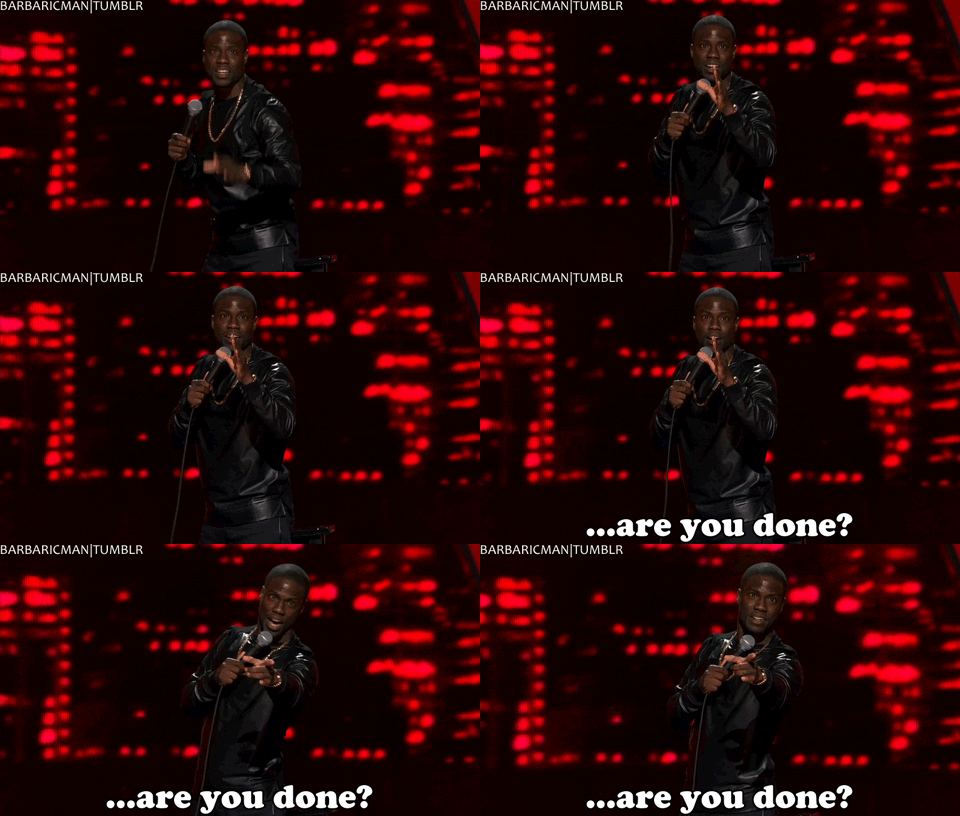
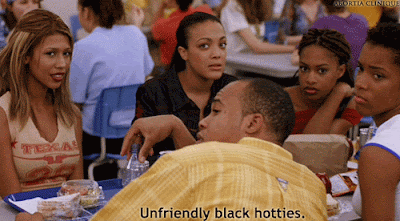
1. You know this situation:
2. Someone called you an "Oreo" and just thought they were sooo clever and original.
[For those who don't know, an "Oreo" is someone who is "black on the outside, white on the inside."]
3.This happened at every party you went to.
4. You had to deal with all of the hella bold people around you using the n-word.
5. You somehow became everyone's go-to black person.
6. People told you "sounded white."
7. People asked you things like: "Do black people tan?"
8. "So what part of Africa are your parents from?"
9. "Why are all the black kids sitting together in the cafeteria?"You were just happy there were other kids who understand your angst. Meanwhile, no one gave them the side-eye for asking this question while they're sitting at an all white table...
10. "You know, I don't even really see you as black."
11. "She's pretty — for a black girl." / "He's cute — for a black guy."
12. "You look like [insert any black person here]."
13. There was that awkward moment in history class when you reached the topic of slavery and everyone turned to you
14. Everyone assumed you were good at basketball.
15. Or asked you to teach them how to twerk. 16. People made all types of corny jokes around you.
18. You did your best to restrain yourself from strangling all the people that exaggeratedly snapped their neck your way.
20. You also had to deal with all the super-angsty white liberals who felt like they had something to prove...
21. Everyone was perfectly comfortable sticking their fingers all up in your hair.
23. It sometimes felt like you were the only one who noticed things like this:
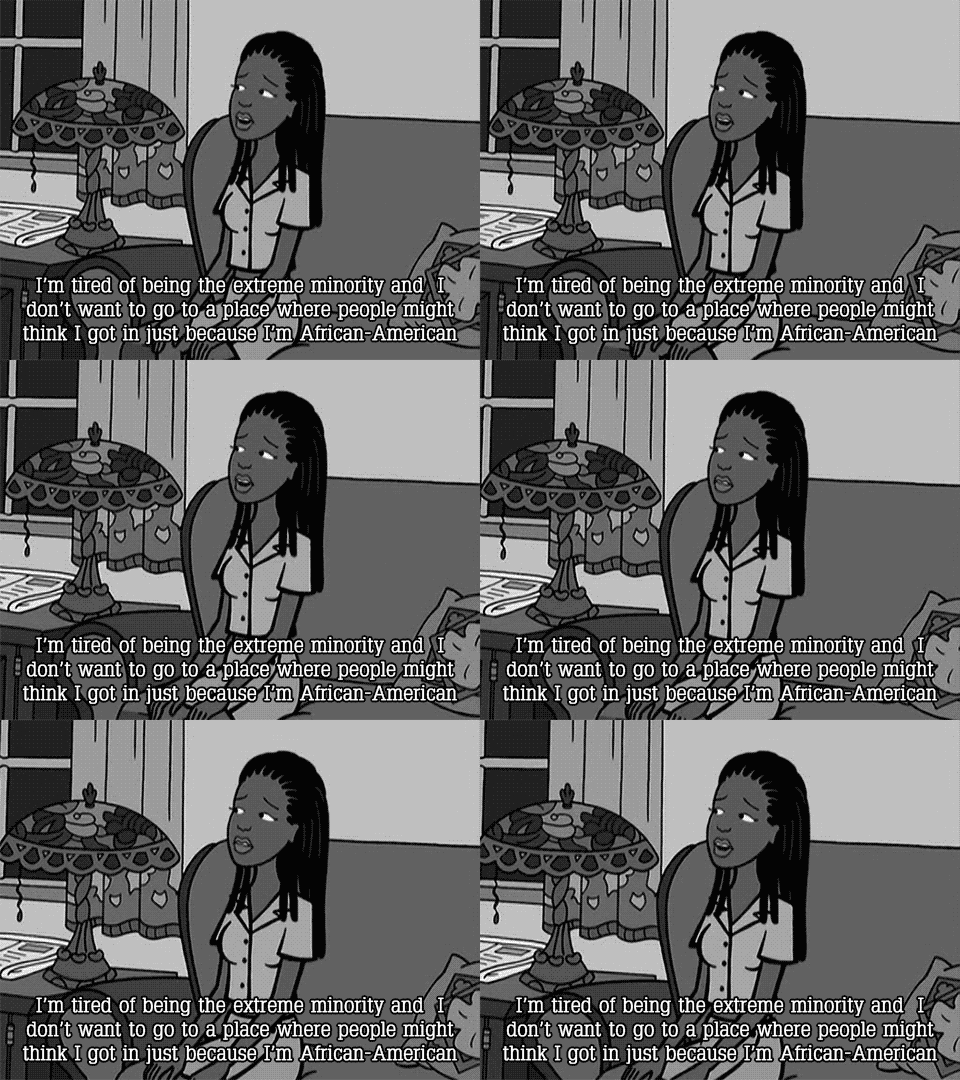
24. When college acceptance letters came out, people started whispering...
But also secretly feeling super angsty about it...and for good reason!)
25. But despite life sometimes feeling like some long absurd joke that no one told you about... You still were able to succeed. Yes. Indeed.
Have you ever come across a homeless individual and felt totally uncomfortable?
You see them and you know they are in need, but you are not sure what to do.
You know that handing them money is not the best thing.
But, you also see that they clearly have some needs. Their lips are chapped.
They are hungry.
They are thirsty.
They are asking for help.
How can you help?
Here is a simple idea - blessing bags.
This was such an easy project.
We are now going to keep a few “Blessing Bags” in our car so that when we do happen to see someone on the streets who is homeless, we can hand them a Blessing Bag.
I first learned of these bags from my friend, Julie. I am using the picture of her bags (see above) because the ones we took were taken in horrible lighting and turned out really grainy and hard to see what is inside of them. If you’d like to make your own Blessing Bags, this is what you would need:
1. Gallon size Ziplock bags items to go in the bags, such as:
2. chap stick
3. packages of tissues
4. toothbrush and toothpaste
5. comb
6. soap
7. trail mix
8. granola bars
9. crackers
10. pack of gum
11. band aids
12. mouthwash
13. coins (could be used to make a phone call, or purchase a food item)
14. hand wipes you could also put in a warm pair of socks, and maybe a Starbucks gift card
Assemble all the items in the bags, and maybe throw in a note of encouragement. Seal the bags and stow in your car for a moment of providence.
This would be a great activity to do with some other families.
Each family could bring one of the items going into the bags (ex: toothbrushes).
Set up all the items around a table and walk around it with the ziplocks and fill the bags.
Information provided by KWAV's, which stands for "Kids With A Vision, whose mission is to create a safe place where kids (kindergarten thru 3rd grade) will: learn about God, explore Bible stories,positively develop character and integrity,learn to serve others and practice generosity and have FUN!
Lets keep it real - we live in a pretty dreamy place.
Over the last 100 years we've seen the blurring of the lines of traditional feminine traits and mannerisms into a once masculine community of men of color in the United States of America.
The chalk line once clearly separating the genders has been washed away in the rain of missing male role models for boys who look to Beyonce, Nicki Minaj and androgynous entertainers like Lady Gaga for guidance...Allegedly.
So to finally set the record straight, we've compiled this Visual History of the Decline of Black American Male Masculinity.
Eight Decade History of the Decline of Black American Male Masculinity
The 1940s
This was a time where Black American masculinity flourished.
Jim Crow Laws were still in effect so men had to be tough to survive.
Lynchings were on the decline but a history of widespread segregation and racism turned boys into men very quickly.
This is also a time when Black American men like the 92nd Infantry Division and the Tuskegee Airmen proved their courage by fighting for our country in World War II.
As you can see from the style of dress, class and distinction was even important to black men of very little means.
The 1950s
The end of the war and the beginning of the civil rights movement once again helps to illustrate the strong state of Black American masculinity.
Men continue to face racially motivated opposition, which reinforces an already clear depiction of what it means to be a man.
Role models like Muhammad Ali showed men how to be tough yet charismatic. Entertainers like Miles Davis and Sam Cooke showed men how to be smooth and fun at the same time.
The 1960s
The heart of the American civil rights movement.
Black male masculinity was seeing the coming of a golden age.
The rise of Dr Martin Luther King Jr.
The Rise of Malcolm X.
The rise of Huey P. Newton and Bobby Seale.
These were men to look up to as examples of defiant masculinity against inequities. The "softest" Black American public figure back then was probably the outspoken James Baldwin, but even he comes off looking like Mike Tyson compared to "soft" black men today.
The 1970s
The 1970s.
The Golden Age of Black American Masculinity.
Here we saw brash, bold masculinity from men like Richard Roundtree as Shaft and Max Julien as The Mack.
The Black Power craze swept the country, making men proud of both their manhood and their blackness.
While brighter colors and slimmer cuts were a growing fashion trend, the wardrobe and style of the day still preserved traditional facets of masculinity. Who knew that it would all be downhill from here.
The 1980s
Thanks to the disco craze of the late 1970s, androgyny became increasingly popular. Blurring the lines of masculinity and femininity was considered the norm.
Hairstyles like jheri curls, beaded braids and extensions made it hard to tell some men from women.
Full tight fitting leather outfits worn by men like Eddie Murphy and Rick James would have raised all of the eyebrows of men from previous decades.
Movies like Breakin' and Breakin' 2: Electric Boogaloo literally featured a cast of men and women wearing the same clothes.
Fortunately several musicians created a New Jack Swing and managed to preserve a shred of masculinity so that we could make it to the 90s.
The 1990s
After the disastrous 1980s, masculinity fought its was back, in a major way. Black American rappers and singers alike brought masculinity to the forefront so much that they over did it. A new form of masculinity was created: Hyper-Masculinity. Black men took masculinity to the extreme. Not only did men have to be "men," they had to be damn near frightening while doing so. We saw the official rise of the "Thug." With the combination of increased crack-cocaine use/distribution and President George H. W. Bush's aggressive War On Drugs targeting black communities in the late 1980s, drug dealers and prison culture became the primary source of role models for young black men in the 90s. The 2000s
With an increasing amount of masculine men missing from the home, young black boys/men flirt with femininity and find that they like it.
Traditional no-nos like wearing pink clothing, skin tight jeans and flamboyant behavior slowly becomes acceptable.
There was a time when wearing earrings was off limits.
But in this decade, not only does wearing ONE earring eventually become the norm, wearing TWO jewel encrusted earrings evolves to being commonplace and brag worthy for men.
Then the sagging craze begins.
Young black Men cement a vast contrast to their 1940s counterparts by shedding the last bits of class and distinction remaining in their style of dress.
These men surpass women in showing off "bubble-butts" by revealing their underwear, to draw even more attention their "assets" (but supposedly this doesn't make all of them gay, for some unknown reason).
The 2010s
Here we are, the current decade. Black men with leopard print pants, man-purses, designer scarves in the summer, women's blouses, star/paw-print/belly-button tattoos, male tramp stamps and over-done hairstyles dominate our streets and popular culture.
Men actually desire to be "pretty" by spending more hours in the gym and mall fitting rooms than in a book or classrooms.
Not to mention an abnormal Diva worship that has created a disciple flock of soft feminine men causing one to wonder what the future holds.
How much lower can it get from here?
In relation to homosexuality, even older gay men have noticed this rapid decline of black masculinity. We've heard stories where gay men describe a past clear and equal balance between masculine and feminine gay men back in the day. They say, by their observations, that nowadays there is a disproportionate imbalance in favor of femininity, even amongst heterosexual men.
Think about it, the only way a film like Brokeback Mountain about two masculine gay men could believably be made was to have it take place in the 1960s and 1970s! That film made by current standards in a modern time would be, well...Noah's Arc: Jumping The Broom.
Based on this visual history, one would come to the conclusion that once Black Americans no longer had the overt burden of segregation and racism to deal with, they no longer had much of anything to fight for. No longer any need to be "strong, masculine men."
This analysis is actually very plausible. Take the largest modern protest that Black American men have had to face, the Trayvon Martin movement. Young black men were seen wearing expensive designer hoodies in photos on Facebook and Twitter via their smartphones/Macbooks and claimed that they were a part of a "struggle" like the strong men in the civil rights movements of the past.
Get...The F@#*...Outta Here...
This question of the reason for the decline of masculinity is probably one to examine further at a later date, but this visual history makes it clear that there is in fact a question to be asked in the first place.
In our NEW children’s Book entitled, “Larry Long Legs,” you will learn quickly that…”even the fastest, strongest, smartest and most skilled will underachieve if they concentrate on the wrong things, are unable to quickly let go of mistakes or bad breaks, lack self-confidence or can't handle the pressure of competition. If you leave the mental side of performance to chance, then you're more vulnerable to performance problems like excessive nervousness, psych-outs, choking, slumps and blocks. To be more consistently successful you have to learn to harness the power of sports psychology to help you think like a winner and develop mental toughness.
What is mental toughness? In sports psychology, mental toughness is a combination of learned skills that will help you raise the level of your training and competitive performance: These include:· Goal Setting · Stress Management · Self-Confidence · “Reboundability” · Winning Concentration · Imagery & Visualization
As a coach, a working knowledge of sports psychology techniques will help you become more effective and therefore much more successful with your athletes.
Knowing how to get the most out of your players at “crunch time” and how to avoid the mental traps that far too many coaches fall into will enhance your technical skills as a coach and give you the competitive advantage.
Train your athletes to use mental toughness skills and they'll regularly compete to their potential.
As a parent, the principles in sports psychology and youth sports can help you insure that your children enjoy their competitive sports experience, learn quickly and perform to their potential. In addition, sports psychology can help you avoid the performance-disruptive and self-esteem damaging mistakes made by too many well-meaning parents. If you really want your child to win, then you must learn to play the proper role on the athlete-coach-parent team. "by Dr. Gail (sports psychologist)
Gain that Competitive Advantage and "mental toughness" by reading our new children's book entitled "Larry LONG LEGS" available at www.bn.com, www.authorhouse.com
It's been 7 years since Bobbee Bee started his journalistic journey in the animated world. He, however is not a cartoon character. He is more like a HOOD FIGURE.
"BORN TO BE LOVED: AND LOVED TO BE HATED"
Because during his artistic adventure, Bobbee Bee has landed in Archway Magazine, an magazine highlighting the achievement of Winston-Salem State Alumni as well as been interviewed by Afrika Perry of (102.1 JAMZ)in Greensboro, North Carolina,. plus by Cheryl Robinson host of Just About Books on Harabee Radio.
Bobbee Bee has even appeared on television on http://www.brandnewz.com/ with Christopher Martion, formerly known as PLAY from the Hip-hop group Kid-n-Play and now is the featured cartoon on the BLACK ATHLETE SPORTS NETWORK which appears every week on http://www.blackathlete.com/.
Along with these accomplishment, Bobbee Bee has even rubbed elbows with the "so-called intelletuals" in the academic world when he was invited to attend the 3rd Annual Black Counseling and Psycholist Conference at Howard University in Washington, DC along with an invitation to the 37th Annual Congressional Black Caucus as a Future Emerging Leader in Black American as well as the Annual Black Social Workers Conference in Houston, Texas and the Annual Juevnile Justice Institute Conference in Durham, North Carolina.
And, just recently, he appeared in his first full-length feature film, entitled, simply, "Bobbee Bee"The Hater" featuring William Isiah Shakur as Bobbee Bee along with an all-star cast of friends and enemies, that premiered at James Sprunt Community College in Kenansville, North Carolina on September 21, 2013.
Due to his charismatic personality and LOVE for children he also made several guest appearance at several local schools like Torchlight Academy (Raleigh, NC)Kenansville Elementary School (Career Day Celebration), Warsaw Elementary (Parent and Teacher Night), Greenevers Pre-school, Thelma-Gibbs Library (Wallace,NC)James Sprunt Community College, Warsaw Junior High School as well as James Kenan High School. As a result, anybody who has seen Bobbee Bee LIVE must admit regardless of race, color or creed that his message is powerful and life-changing. Here are some of the comments from several students who have seen Bobbee Bee's presentation and have read his books or cartoon.
"I think it was great. Trust me, that's alot coming from me. Albert Carlten.
Well, I don't like it; I love it!! I had a good time and I enjoyed the book. I was just like that boy in the story who loved to fight, didn't want to study and didn't like school. I didnt like my mom and my dad but now I love them. Thank You. -John-
His presentation was educational and funny at the same time. I think he should give out copies of Bobbee Bee "The Hater" so students can read it. -Gloria M.Borja
Mr. Graham's presentation was good. It helped me to know that I need to make plans for the future and go to college. It also made me proud of who I am ... -Senita King-
Bobbee Bee is somewhat like me. But I guess that's life. It would be nice if you could come again. -Stacy Puckett-
You made us have fun with the program by dressing us up in different kinds of silly outfits. You also helped me personally see another side that I've never seen before. -Tavian Johnson-
I learned alot from Mr. Graham. He is a good speaker. He made me realize I can be something in life. At first I was going to college just for sports but now I want to learn something in college and be something after college. -Sean Wilson-
We can't be ignorant for the rest of our lives . Your presentation seemed to stress that. -Ashua Quinn
I thought Mr.Graham's had a very good presentation. The way he presented his information was very professional and positive. He told us how to reflect positive images of ourselves. I learned alot and I appreciate the visit. -Rudy Ramirez-
Mr.Graham's sense of humor played a great role in his presentation. It seemed as if he brought the characters to life. -Iesha M. Frederick-
Mr. Graham's presentation was AWESOME. I loved the book and the way he let us play the roles. I loved the characters and the way he related their names to their problems. -Eric Sugg.
Your performance was so good that you should go national with the things you told us. It made a difference to hear what you said because I'm changing my lifestyle. You should get your own TV SHOW!! to spread the words you told us. -Jonathan Cherry aka "The Coach's Son"
Eric Graham is going to have a successful life if he continues to help children. Maribel Garcia-